The autumn season of 2026 redefines shopping decisions around two parameters that traditional guides underestimate: law n° 2026-602 on ultra-express fashion, which came into effect on September 1, 2026, and the shift of shopping journeys towards mobile applications. We are witnessing a structural change in the way seasonal wardrobes are built, far beyond simple recommendations of colors or cuts.
Anti-fast fashion law and impact on the price of trendy pieces
The French law n° 2026-602, adopted on July 8, 2026, introduces a modulation of the textile contribution that can reach 12 euros per item, with a ceiling set at 50% of the price excluding taxes. The first provisions have been active since September 1, 2026.
For seasonal shopping, the direct consequence is a mechanical increase in the price of entry-level items. Brands positioned on very short production cycles pass this eco-contribution onto the final price. A pair of pants or a dress purchased through these channels now costs significantly more than before the summer.
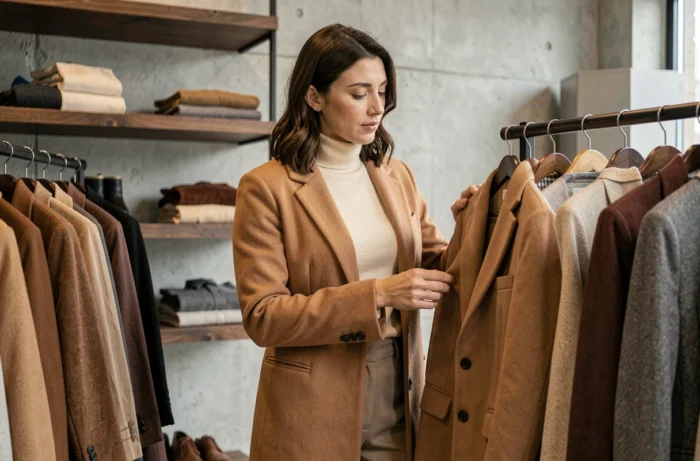
We recommend redirecting this budget towards slower rotation pieces: a structured jacket, a good quality pair of jeans, a grainy leather bag. The cost per wear becomes the true indicator of profitability for a fashion purchase. Three well-chosen pieces effectively replace eight disposable items whose unit price has risen.
The advertising restrictions set to take effect on January 1, 2027, include direct or indirect promotion by influencers. Shopping recommendations shared on social media will therefore evolve in the coming months, with fewer product placements for the affected brands. Following the news on Mode by S allows you to spot brands that anticipate this transition without sacrificing the style-price ratio.
Mobile shopping and AI tools: adapting your shopping method this autumn
According to the Similarweb State of Ecommerce 2026 report published in September, fashion shopping is increasingly shifting towards mobile applications rather than traditional web. Price drop notifications, in-app private sales, and integrated payment features create a distinct shopping channel from the desktop site.
A shopping advice focused solely on web browsing misses these mechanisms. Here are three concrete reflexes to leverage this channel:
- Activate price alerts on the apps of your favorite brands, targeting the key categories of the season (jacket, jeans, sneakers)
- Compare prices using the AI tools integrated into mobile browsers, which aggregate offers in real-time on the same item
- Check app exclusives before finalizing a purchase on the site: some brands reserve discounts or colors for mobile purchases
The ACI Worldwide report from September 2026 confirms that AI functions as a price comparison tool, not as an automated stylist. Only 7% of surveyed consumers would accept an autonomous purchase driven by AI, even under predefined conditions. Human validation remains the last filter before purchase.
Autumn 2026 palette: colors that structure a coherent wardrobe
The spring-summer 2027 runway shows presented during the September Fashion Weeks are already outlining the chromatic shifts of the season. For the immediate autumn, we observe two strong axes in the collections available in stores.
The first axis is the return of saturated earthy tones: cinnamon brown, deep rust, dense khaki. These colors work particularly well on structured pieces (straight pants, short jacket, midi skirt) because they combine effortlessly with each other.
The second axis retains metallic shades that have been present for several seasons. Gold, silver, and copper are worn in touches on accessories (bag, shoes, belt) rather than in a total look, which allows for enhancing a sober outfit without slipping into a costume-like appearance.

Building an autumn look with three key pieces
The logic of a capsule wardrobe makes perfect sense when entry costs rise. We recommend structuring your purchases around three key pieces:
- An oversized wool blend blazer, in a neutral or earthy tone, that works well with both barrel jeans and a flowy dress
- A wide pair of thick fabric trousers, worn with chunky-soled sneakers for a casual style, or with ankle boots for a more dressed-up look
- A pair of square-toed shoes, a strong trend this autumn, that effectively replace tired pointed models from several seasons of overexposure
This triptych covers most everyday situations. Each piece combines with the basics already present in the wardrobe: white t-shirt, striped shirt, turtleneck sweater.
Shopping mistakes to avoid with the new pricing landscape
The reflex to buy in bulk on ultra-express platforms loses its economic logic. With the eco-contribution, the low price is no longer as low, and the perceived quality has not improved in return.
Another common trap: succumbing to micro-viral trends promoted by social media without checking availability in physical stores. Algorithms highlight pieces that are sometimes out of stock or available only through long channels, with delivery times incompatible with seasonal use.
The most profitable advice this season remains to prioritize thoughtful purchases of pieces whose stylistic lifespan exceeds a single autumn. A good pair of jeans, a sober bag, a well-cut jacket will last through several seasons without aesthetic depreciation. Sustainable style is no longer a moral stance; it’s a financial calculation that the law of July 2026 makes even more relevant.