JOELLE, the Quebec brand born in Trois-Rivières, has been rolling out new products for several months. Between the opening of new stores, a house magazine, and an unapologetic western trend, the label founded by Joëlle Désaulniers is multiplying initiatives. The pace is picking up, but the question of the sustainability of the clothing remains unresolved.
Western trend at JOELLE: between cultural inspiration and sustainable textile choices
Have you noticed the fringes, boots, and raw denim in the shop windows these past seasons? At JOELLE, the western influence is not just a passing fashion trend. The brand has been exploring this aesthetic since 2024, incorporating materials like durable wools and raw denim.
Joëlle Désaulniers reminds us that the western style draws its roots far beyond Hollywood cinema. She notably mentions the history of Mexican workers, whose clothing legacy has been largely reinterpreted by popular culture. This historical perspective adds depth to the stylistic choice.
Specifically, the collections include metallic accessories, fringes, and cuts inspired by ranch wear. Western boots and leather details regularly appear in new arrivals. Following the news on Chez Joëlle allows you to spot these pieces as soon as they go on sale, before they sell out.
The real tension lies between the speed of renewal and the quality of materials. Offering a collection each month, as JOELLE now does, requires a steady supply of fabrics. How can it be guaranteed that the denim or wool used remains traceable when the schedule tightens? The brand has not yet communicated in detail about its manufacturing processes, leaving the question open.
Five stores in Quebec: what the physical network changes for local fashion
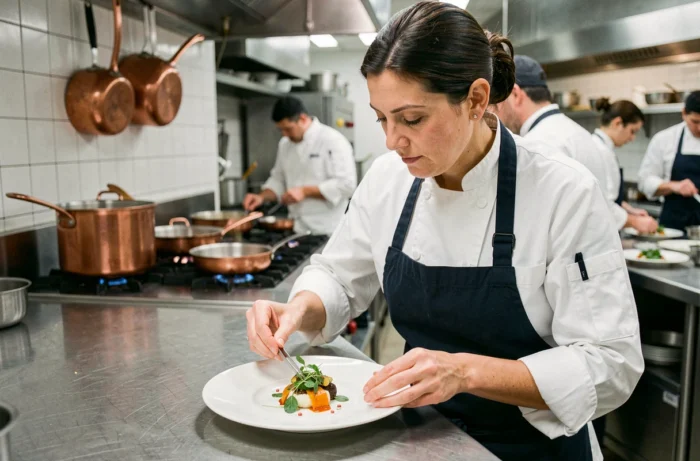
JOELLE now has five physical stores in Quebec. This figure, confirmed by Le Devoir in October 2026, marks a milestone for a brand that started in Trois-Rivières.
Why this choice of brick-and-mortar retail at a time when online sales dominate? The tactile experience remains a strong argument for clothing. Touching a wool fabric, checking the fit of a raw denim jean, trying on a western boot: these are gestures that digital cannot replace.
The brand’s roots in Trois-Rivières remain central to its identity. The city serves as both headquarters, a creative space, and a meeting point with the community. Local events strengthen this bond, and JOELLE seems to be betting on physical presence as a loyalty lever rather than solely on digital growth.
One collection per month: accelerated pace and clothing sustainability
The shift to a monthly collection is the most significant change at JOELLE. This format allows for refreshing the pieces in stores and following micro-trends, like the western style, without waiting for the traditional spring-summer or autumn-winter seasons.
This pace raises a direct question: can a collection per month remain compatible with sustainable clothing? The fast fashion model operates on the principle of rapid turnover, but often with mediocre materials and opaque manufacturing.
JOELLE stands out by choosing more durable fabrics (raw denim, thick wools) and maintaining a coherent stylistic identity from month to month. The pieces are not disposable. However, the traceability of manufacturing remains a point where the brand could communicate more. Here are the concrete questions this raises:
- Where do the fabrics used for the monthly collections, particularly denim and wools, come from?
- Are the quantities produced per model limited to avoid overproduction, or does the rapid turnover imply high volumes?
- Does the brand consider a visible traceability system for customers, such as a material sheet for each product?
The JOELLE magazine: a new content format for Quebec fashion
In early 2026, JOELLE launched its own magazine. The concept was announced on social media with notable engagement: the presentation video on Facebook surpassed 60,000 views.
The magazine is not just a sales catalog. It is part of an editorial content strategy, featuring staged collections and a narrative around the brand. It serves as a positioning tool: JOELLE is transitioning from a clothing brand to a complete fashion universe.
This format also allows for contextualizing trends. Explaining why western style is making a comeback, telling the story behind a cut or fabric: the magazine offers a space that product sheets do not allow. For a brand that claims a cultural and local grounding, this is a coherent channel.
Local fashion and events in Trois-Rivières: the calendar to follow
JOELLE’s event anchoring in Trois-Rivières has strengthened in recent months. The brand participates in local events and uses its stores as meeting places with its community.
This strategy is not trivial. For a Quebec fashion company, proximity to the local clientele remains a real competitive advantage against the giants of online commerce. In-store presentation sessions, collection launches, and collaborations with other cultural players in Mauricie create an ecosystem that is difficult to replicate from a distance.
- Monthly collection launches in-store, with previews of new pieces
- Collaborations with cultural players in Trois-Rivières and Mauricie
- The brand’s presence at local events related to fashion and culture
The development of JOELLE illustrates a particular trajectory in the landscape of fashion in Quebec. The brand is accelerating its creation pace and expanding its network of stores while asserting a strong local grounding. The next logical step would be to make the manufacturing chain visible, so that the promise of sustainability goes beyond material choices and extends to the entire process.