Successfully hosting a culinary reception is not just about the food. The choice of equipment determines the smoothness of service, food safety, and, recently, the regulatory compliance of the packaging and containers used. What equipment distinguishes a well-executed service from a haphazard buffet, and how do the new obligations related to reuse change the shopping list for caterers or event organizers?
PPWR Regulation and Reuse: What Changes for Event Equipment
Competitors readily list ovens, steamers, and gastronorm containers. They rarely mention the regulatory framework that now weighs on the choice of containers and packaging. The European regulation PPWR (EU) 2025/40 requires professionals to document the compliance of each item used during an event.
In practical terms, simply displaying the label “reusable” on a cup or tray is no longer sufficient. The organizer must be able to prove that the container is part of a collection, washing, storage, and redistribution circuit that is genuinely operational. This means that even before thinking about the menu, return flows must be integrated into the reception’s layout plan.
The extended producer responsibility (EPR) also applies. Depending on the role played in bringing packaging to market, the organizing company may need to identify and trace each relevant item. For a seminar buffet as well as for a gala cocktail, this constraint translates into an additional logistical item: sorting bins, a return area for containers, on-site washing capabilities, or a contract with a specialized service provider.
Among the suppliers who integrate these constraints into their catalog, the equipment available on the L’Entracte Gourmand site covers several ranges compatible with the requirements of professional reuse.
Comparison of Equipment by Type of Reception
Not all culinary events require the same equipment. A seated lunch for a corporate seminar, a standing cocktail buffet, or a coffee break have different volumes and temperature constraints. The table below contrasts three common formats.
| Equipment Type | Seated Lunch (Seminar) | Cocktail Buffet | Coffee Break / Beverages |
|---|---|---|---|
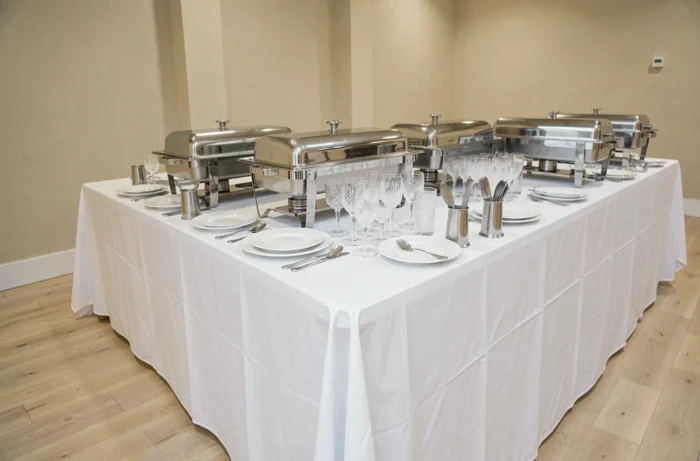
| Heat Maintenance | Large steamers, bain-maries | Chafing dishes, warming plates | Percolators, professional kettles |
| Cold | Refrigerated cabinet, cold display | Refrigerated display, ice bins | Mini-fridge for milk, juice |
| Work Surfaces | Long stainless steel tables, service carts | High tables, mobile serving stations | Dedicated counter, serving tray |
| Dishes / Containers | Plates, cutlery, glasses (reuse) | Small jars, cups, small forks | Cups, saucers, stirrers |
| Reuse Logistics | Return bin, washing area | Collection points distributed in the room | Simplified collection (low volume) |
The most underestimated aspect remains the logistics of returning reusable containers. For a standing cocktail hosting several dozen guests, planning collection points distributed throughout the room prevents the accumulation of dirty dishes on high tables and minimizes breakage.
Temperature Maintenance Equipment: Choosing Between Steamer and Bain-Marie
Temperature maintenance is the area that generates the most disappointments during catering service. A dish served lukewarm ruins the perception of the meal, regardless of the care taken in preparation.
The steamer maintains dry, even heat, suitable for dishes in gastronorm containers that must wait before serving. It is appropriate for seated lunches where plating is done in a temporary kitchen. However, it dries out sauce preparations if the waiting time exceeds a certain duration.
The bain-marie works in the opposite way: the moist heat preserves the textures of stewed dishes, sauces, and creamy accompaniments. For a buffet where guests serve themselves over an extended time frame, it is often the most reliable choice.
- Sauced dishes, risottos, braised vegetables: prefer the bain-marie to avoid drying out
- Roasted meats, gratins, poultry pieces: the steamer preserves the crispness and integrity of the dish
- Service stretched over more than an hour: combine both, with a steamer in the back kitchen and bain-maries in the dining area
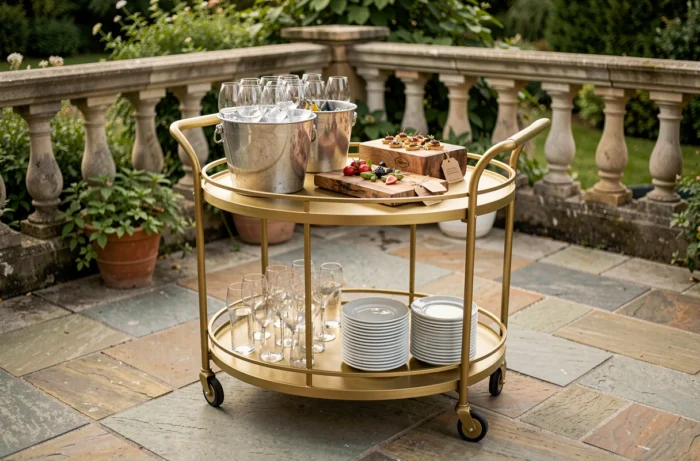
Space Organization: Forward Flow Applied to Events
Setting up a temporary kitchen in a hallway, back room, or technical area requires adhering to the forward flow. This food hygiene principle demands that food always moves from “dirty” to “clean,” without crossing between the flows of reception, preparation, and service.
Applying this principle in a constrained space requires mapping the areas before ordering any equipment. The area for receiving raw materials must not cross the plating area. The area for returning dirty dishes must not cross the refrigerated storage space.
- Plan a one-way circulation, even in a small space, by positioning stainless steel tables in an “L” shape or in a line
- Isolate the washing station (or return bin) at the end of the flow, never in the center
- Check the electrical capacity of the venue before any installation: combined steamers, cold cabinets, and percolators can exceed the available power
An electrical sizing failure is the primary cause of breakdowns during events in non-dedicated sites. Requesting the power reading from the venue manager several weeks before the reception avoids unpleasant surprises on the day.
Anticipating Breakage and Loss of Containers
With the shift to reuse, breakage becomes a budget item in its own right. Planning for a margin of extra containers (cups, plates) allows for absorbing losses without improvising with disposables during service. This often-overlooked point makes the difference between a smooth event and a service that derails at the end of the evening.
Professional equipment for receptions is no longer limited to a list of ovens and refrigerators. Regulations on reusable packaging transform every culinary event into a logistical exercise. Mastering the hot, cold, and return container chain on the same temporary site remains the true marker of a successful service.