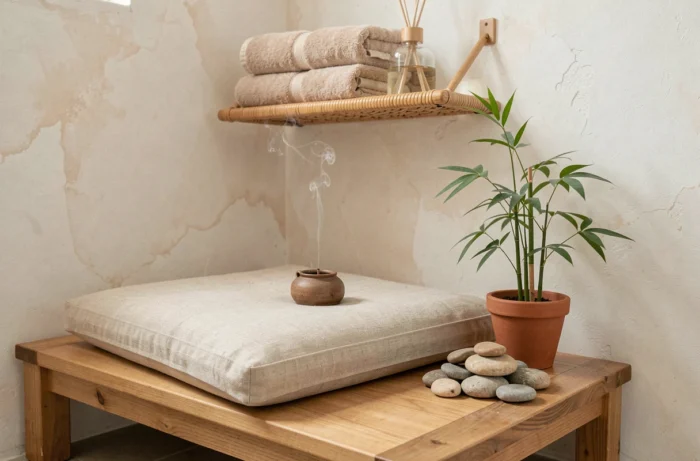
A domestic wellness corner is not just about stacking cushions in a corner of the room. The result depends on measurable parameters (acoustics, color temperature, seating ergonomics) that decor guides often overlook.
Acoustics of the zen corner: noise thresholds and targeted insulation
The acoustic performance conditions everything else. A relaxation space installed near a mechanical ventilation system or a poorly calibrated air purifier loses its function as soon as the device is turned on.
French regulations limit equipment noise to 30 dB(A) in bedrooms and 35 dB(A) in kitchens according to the decree of June 30, 1999. These thresholds serve as a direct reference: if you install your meditation corner in a bedroom, any integrated device (diffuser, fan, reversible air conditioning) must remain below this threshold to avoid compromising the quality of rest.
We recommend measuring the ambient noise level with a sound level meter app before choosing the location. A hallway between two living spaces often exceeds the comfort threshold, even with closed doors. A corner of a bedroom facing the courtyard or a nook under the eaves offers a much lower acoustic floor.
Since Law No. 2024-346 of April 15, 2024, abnormal neighborhood disturbance is codified in Article 1253 of the Civil Code. Repetitive or prolonged noise from a household appliance (air conditioning, relaxation speaker) can engage the individual’s liability. For a zen corner equipped with a speaker or sound diffuser, the nuisance is assessed based on duration, repetition, and intensity. It’s worth considering this from the design stage, especially in an apartment.
If you are looking to create a wellness corner with a zafu cushion on C Ma Déco, sitting on the floor also changes the perception of ambient noise: the lower you are, the more sound reflections from the ceiling are diminished compared to a higher seated position.
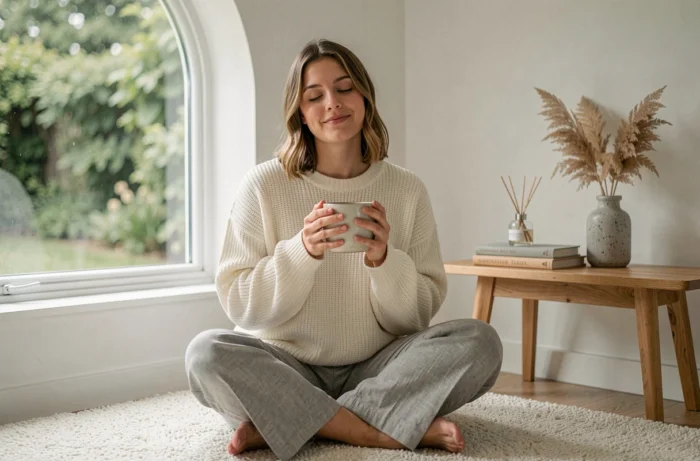
Floor sitting and ergonomics: meditation cushion, zafu, bench
The seat is the longest point of contact between the body and the zen space. A poor support generates lumbar tension that negates any relaxation benefits.
A properly filled zafu tilts the pelvis forward, releasing the natural lumbar curvature. The standard diameter is around 35 cm, but the filling height should be adjusted according to the ratio between femur length and hip flexibility. A person with stiff hips needs a higher seat to avoid rounding the back.
The choice of filling is as important as the shape. Spelt husks provide firm support and natural ventilation. Kapok, being lighter, compresses more over time. Buckwheat is a compromise between the two.
- Spelt zafu: stable support, suitable for long postures, requires regular airing to avoid moisture
- Zabuton (mat under the zafu): protects the ankles and knees from contact with the hard floor, a few centimeters thick in carded cotton
- Inclined meditation bench: an alternative for those who cannot tolerate a cross-legged position, seating angle that preserves lordosis
Color temperature and zen lighting: beyond “dimmed”
Dimming the light is not enough. The color temperature determines the physiological effect of lighting on the nervous system.
Bulbs sold as “warm white” cover a wide range. For a relaxation space, we recommend staying below 2,700 kelvins. Above this, the blue component of the spectrum stimulates alertness, which goes against the objective.
Candles produce light around 1,800 kelvins, resulting in a very red spectrum that promotes melatonin secretion. They remain the most consistent source for a meditation corner used in the evening. LED filament string lights, often around 2,200 kelvins, provide a sustainable alternative without flame.
A technical point often overlooked: the color rendering index (CRI) influences the perception of the ambiance. A cheap LED bulb with a CRI below 80 gives a dull appearance to textiles and natural materials, even if the color temperature is correct. For a zen corner where textures (linen, raw wood, wool) contribute to the atmosphere, a CRI above 90 accurately reproduces the nuances.
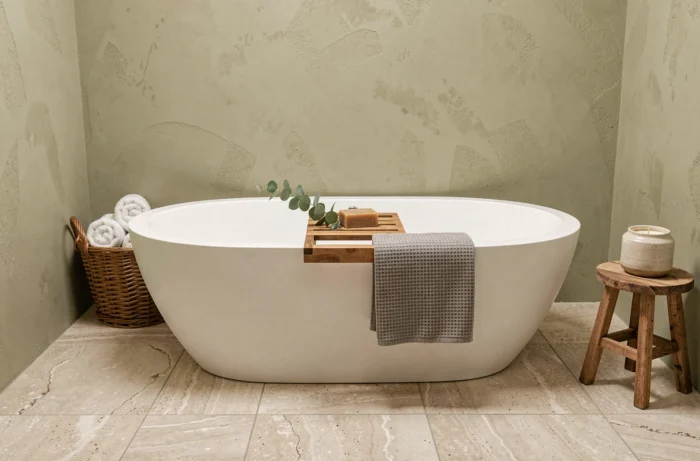
Natural materials and cocooning palette: concrete choices for a relaxation corner
Soothing colors are not limited to off-white and beige. Earthy tones (clay, sage, stone) absorb light better than light pastels, reducing glare and visual fatigue in a small space.
The flooring plays a central role. A wool or jute rug placed directly on a wooden floor creates a thermal and sensory break that signals the transition to the zen space. Wool naturally regulates humidity, maintaining a sense of comfort even barefoot in winter.
- Washed linen for cushions and curtains: matte texture, does not retain heat, softens with washing
- Unvarnished wood (cedar, pine, light oak) for shelves or benches: soothing residual scent, natural patina
- Terracotta or stoneware for containers (candle holders, incense burners): thermal mass that slowly diffuses heat
- Rattan or wicker for storage baskets: visual lightness, ventilation of contents
Each textile or mineral element should be chosen for its tactile sensation as much as for its appearance. A shiny polyester decorative cushion disrupts the cocooning atmosphere even if it is the right color.
Defining the zen space without partitioning the room
In a compact interior, the relaxation corner often shares the room with a living room or bedroom. Delimitation comes through visual and sensory markers rather than bulky furniture.
A change in flooring (thick rug placed on hardwood) marks the boundary. A wooden screen filters the view without blocking light. A tall plant (ficus lyrata, monstera) placed at the boundary creates an organic separation that evolves with the seasons.
The ritual of entering the space is as important as the physical layout. Lighting a candle, removing shoes, rolling out a zabuton: these repeated gestures condition the brain to switch to rest mode. Without this behavioral marker, even the best-designed space remains just a corner of the room.
The last point to check is ventilation. A confined space where incense or candles are burned quickly accumulates CO2 and fine particles. A tilt-and-turn window nearby, opened a few minutes before and after each session, is enough to renew the air without creating an unpleasant draft.