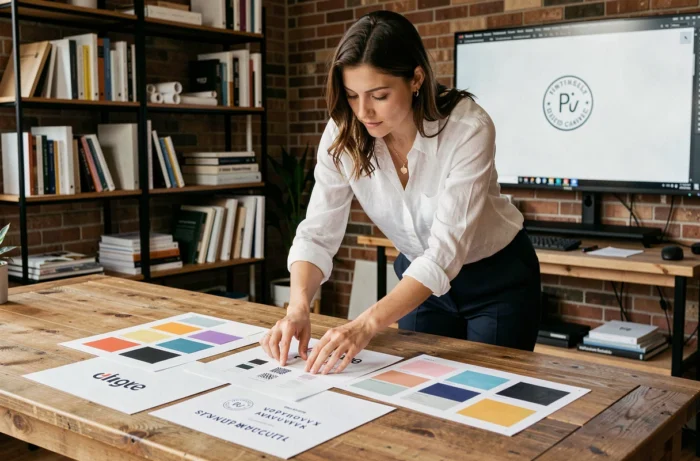
A pixelated logo on a business card, a commercial brochure with clashing colors, a website that seems to be from another era: these details shape the first impression a prospect has of your company. The expertise of a graphic design studio comes into play precisely at this point, where the visual image conditions trust even before a word is read.
AI Marking and Legal Mentions: What Regulation Changes for Visuals
Have you noticed the mention “Retouched images” on certain advertisements? Since the gradual implementation of the European AI Act, visual content generated or manipulated by artificial intelligence must be identifiable as such. The ARPP published a practical guide in August 2026 detailing the labeling criteria: level of AI intervention, degree of realism, impact on the perception of truthfulness.
For a graphic design studio, this obligation concretely changes the production flow. Every advertising visual created using generative AI tools must carry a clear mention. Images entirely created by AI require the indication “Virtual images.” A studio masters the legal framework of each delivered visual, which protects its clients from sanctions or campaign withdrawals.
This regulatory constraint pushes studios to document their creative process. Knowing how to distinguish between classic retouching, AI assistance, and pure generation becomes a full-fledged technical skill. A solitary freelance graphic designer does not always have the means to keep up with these developments, whereas a structured team organizes ongoing monitoring. To explore the services offered by this type of structure, the dofacto-design.com website provides a concrete overview of the covered areas.

Company Visual Identity: Anatomy of a Creation Process
Why can two companies in the same sector convey radically different impressions? The answer often lies in the rigor of the process used to create their visual identity. A graphic design studio never starts by opening a drawing software.
The Strategic Research Phase
The work begins with in-depth questioning: what audience are you targeting? What price positioning? Which competitors already occupy the visual space of your market? This step helps define a graphic territory, that is, a set of visual codes consistent with your business strategy.
For example, an organic cosmetics brand will not use the same typefaces as a law firm. The choice of colors, shapes, and fonts reflects a positioning, not a personal taste.
From Logo to Complete Graphic Charter
The logo is just the visible part. Behind it, the graphic charter sets the rules for use across all media: business cards, packaging, website, social media, signage. A studio produces a reference document that ensures visual consistency over time, even when multiple providers are involved in your materials.
A well-constructed graphic charter protects your image over several years. It prevents the gradual deviations that occur when each collaborator adapts the logo “in their own way” in a PowerPoint presentation.
Print and Digital Media: Why Consistency Changes Perception
You receive a polished commercial brochure, then visit the website of the same company: the colors are slightly different, the typography has changed, the visual tone is no longer the same. This break creates an unconscious doubt about the seriousness of the organization.
A graphic design studio works simultaneously on print and digital to avoid this mismatch. The creation of a catalog, poster, or flyer follows the same guiding principles as web design or visuals for social media.
- Colors are defined in CMYK (for print) and RGB/hexadecimal (for screens), with precise correspondences noted in the charter.
- Typefaces are chosen from families available in both desktop and web formats, to ensure identical rendering everywhere.
- Layout templates are adapted by medium, with margins, grids, and breathing spaces tailored to each format.
Visual consistency between print and digital enhances the perceived credibility of a company. This work of adaptation is one of the least visible but most decisive skills of a graphic studio.
Visual Communication and Motion Design: Skills That Broaden the Scope
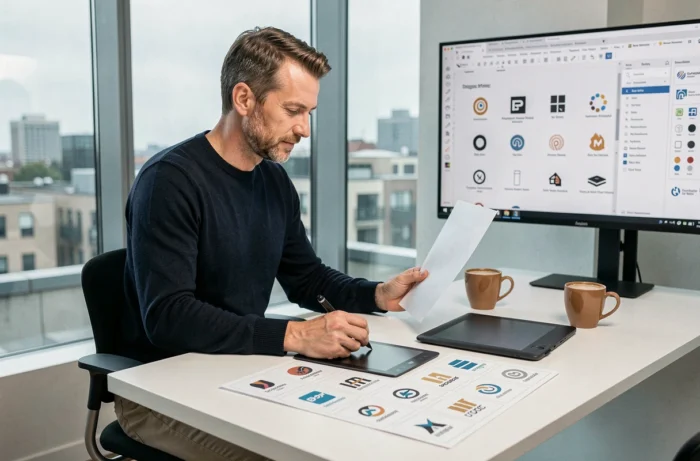
Graphic design is not limited to static media. Today, an increasing share of communication takes place through short videos, logo animations, animated stories, or interactive presentations. Motion design, which involves adding movement to graphic elements, has become a natural extension of studio work.
In practical terms, an animated logo for an email signature or a video intro captures more attention than a static image. Motion design transforms a visual identity into an experience. It is not about adding effects for fun, but about enhancing brand recall.
Beyond animation, some studios also integrate skills in visual communication strategy. Choosing the right format for the right channel (LinkedIn carousel, Instagram story, web banner) involves a consideration that goes beyond simple graphic execution. A visual that performs well on a social network does not necessarily work in a 4×3 display.
What Distinguishes a Studio from a Freelance Designer
A freelance graphic designer often excels in a specific area. A studio brings together several complementary profiles: art director, print designer, web designer, motion designer, and sometimes a front-end developer. This multidisciplinary approach allows for handling a project from start to finish without multiplying points of contact.
- A single point of contact coordinates creation across all media, reducing transmission errors.
- The back-and-forth between graphic design and technical constraints (print resolution, web file sizes, video formats) is managed internally.
- The studio guarantees the overall coherence of the project, from the initial brief to the delivery of final files.
Entrusting your image to a graphic design studio is an investment in structured visual communication, compliant with current regulations and designed to last beyond a single campaign. The result is measured in the consistency of perception: each medium, each touchpoint tells the same visual story, the one your company has chosen to convey.